
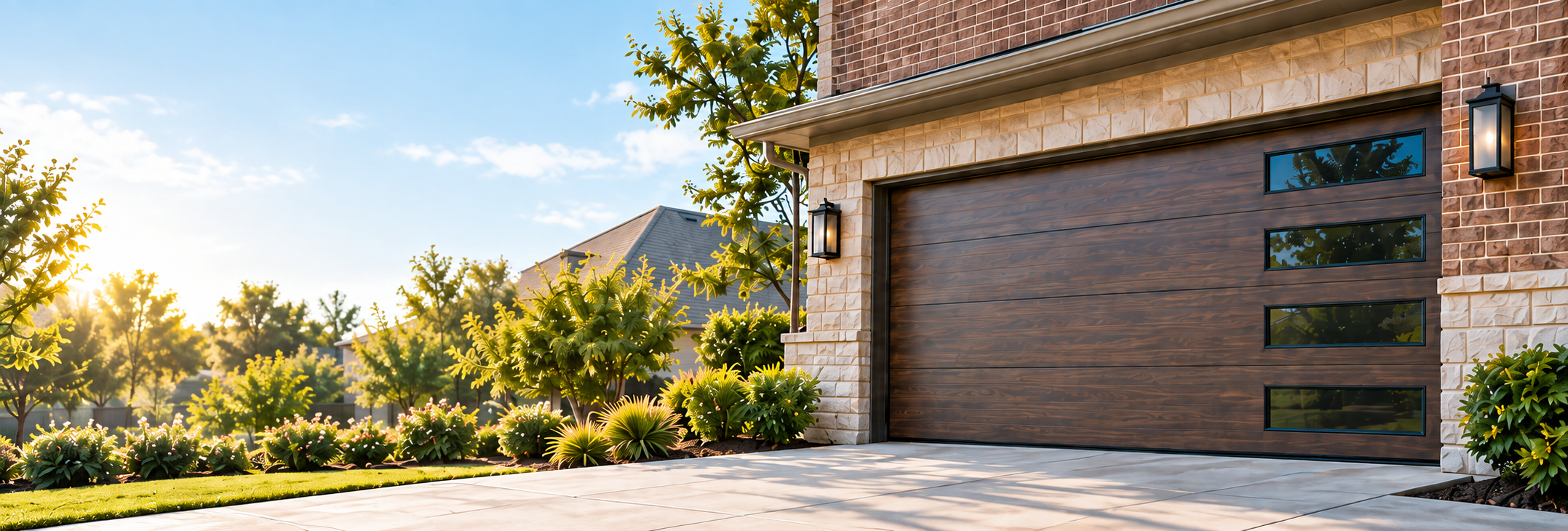
insulated garage doors · Houston
Choose comfort
with a clearer plan.
Compare insulated garage doors for your Houston home, including construction, seals, and everyday use.
Insulated Garage Doors in Houston.
Insulation is one part of choosing a garage door. Think about whether the garage is attached to the house, how the space is used, and what you hope to improve. LifeTime Garage Doors can help you discuss construction options and the condition of the complete opening without promising a particular temperature or energy saving.
Explain how the garage is used
A garage used mainly for parking has different priorities from a workshop or a space beside an occupied room. Tell the team about comfort, noise, appearance, and your budget. Door insulation should be considered alongside other features of the garage rather than treated as a complete solution on its own.
Compare construction and specifications
Ask for information about the exact door model, its construction, insulation specification, and available window choices. Compare like-for-like product documentation. A single advertised number does not describe every part of an installed opening or establish what your particular garage will feel like.
Consider seals and installation details
The fit of the door and condition of perimeter and bottom seals matter to the overall opening. Discuss compatible seals, the existing frame, and any visible gaps. If you are replacing a door, the opener and hardware also need to be considered with the selected construction.
What to expect from your service.
Describe the opening
Tell us about the property, current equipment, and the change you have in mind.
Compare the options
Review the door, hardware, opener compatibility, and what the proposed work includes.
Confirm the plan
Agree on measurements, product availability, site preparation, and scheduling.
What insulation can—and cannot—change in a garage
Start with the room on the other side of the door
Insulation matters most when you connect it to how the garage is built and used. An attached garage below a bedroom raises different questions from a detached space used only for parking. Sun exposure, gaps around the perimeter, walls, ceiling, windows, and air movement all influence comfort. An insulated door can reduce heat transfer through the door itself and often has a more substantial construction, but it cannot control the temperature of an unconditioned room on its own. We ask about the space and your goal so the discussion stays realistic.
Compare construction, not just one number
R-value is useful, but it is not the whole story. The number belongs to a particular door construction and test method; it does not describe installation gaps, window areas, or the rest of the garage. Look at the layers of the door, interior finish, section joints, perimeter seals, and glazing choices together. If two products use different language or testing information, we can help you compare the manufacturer specifications on equal terms. The best choice is the one that provides the construction and performance you value at a cost that makes sense for the room.
Balance daylight, privacy, and thermal performance
Windows can make a garage much more pleasant, especially when it is used during the day, but they also change privacy, appearance, and the insulated area of the door. The window location, glass option, and exposure all matter. A high row can bring in light while limiting direct views from the street. Decorative designs may suit the house but need to be checked against the selected door model. We can show how the window package fits into the complete door rather than treating glass as a purely decorative add-on.
Pay attention to fit and everyday operation
A well-chosen door still needs to fit the opening, seal reasonably around the perimeter, and operate as a balanced system. Added weight or a different construction can affect springs, hardware, and opener suitability. If you are replacing an existing door, we look at which parts can remain and which need to match the new assembly. After installation, normal maintenance and the manufacturer’s care instructions still apply. Insulation does not remove the need to address damaged seals, worn hardware, or unusual movement when those issues appear.
Insulated Garage Doors: your questions.
Will an insulated door make my garage air-conditioned?
No. An insulated door does not create a conditioned space by itself. The building, ventilation, other surfaces, and any heating or cooling arrangements affect the result. Discuss realistic goals for the complete garage.
Can an insulated door include windows?
Many product ranges offer window options, but choices depend on the model. Compare the complete door specification and ask how the selected windows relate to your privacy, appearance, and insulation priorities.
Can insulation simply be added to my existing door?
Ask for the current door and proposed change to be assessed. Added material changes the setup and should not be assumed compatible with the door, springs, or opener. A purpose-built replacement may be one option to compare.
How do I compare different insulation claims?
Request documentation for the exact models being quoted and make sure the figures describe comparable things. Ask how construction, seals, windows, and installation scope differ rather than choosing only by a headline number.
Will an insulated door keep my garage cool without air conditioning?
No door can hold a fixed temperature in an unconditioned garage. Insulation can slow heat transfer through the door and may make the space feel less exposed to outdoor swings, but sun, walls, ceiling, windows, gaps, and ventilation still affect the result. We can help set realistic expectations for your garage.
Can an insulated garage door still have windows?
Yes, on many models. The available shapes, locations, and glazing options depend on the door. Windows trade some insulated area for daylight and appearance, so it helps to compare privacy and exposure as well as looks. We will confirm which window packages are available for the selected construction.
Should I add insulation to my existing door or replace it?
That depends on the door’s design, condition, balance, and the manufacturer’s guidance. Added material can change weight and operation, and a damaged or poorly fitting door may have other issues that insulation will not solve. We can assess the existing system and compare a suitable retrofit, if one exists, with a purpose-built insulated replacement.
Tell us where you need help.
Share your service address so we can confirm coverage and appointment availability for the requested work.