
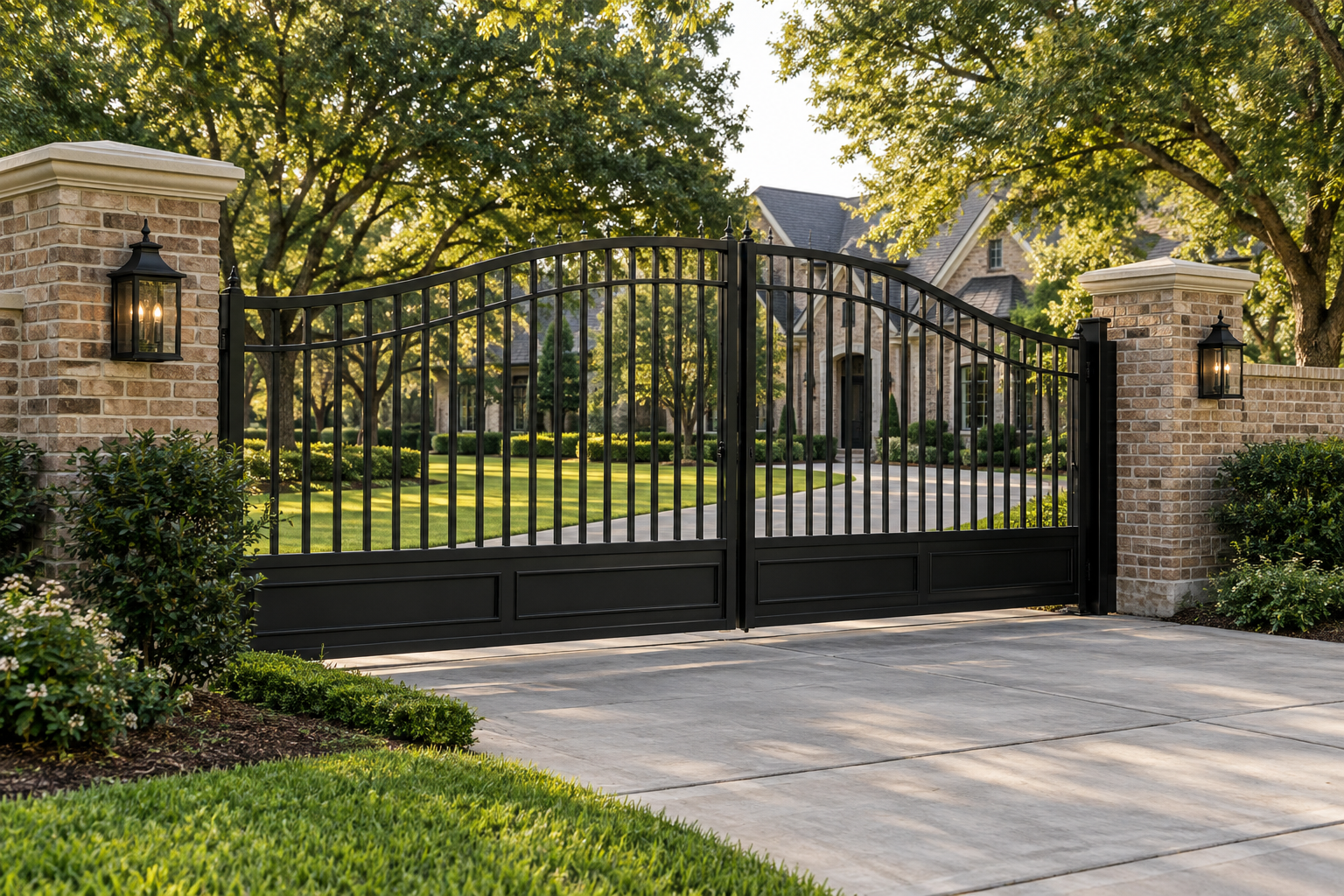
Gates & Fencing services · Houston
Make access
work for your property.
An entrance works as a complete system: the gate, supports, operator, controls, and movement path all matter. Explore help for an existing problem or planning information for a new project. Share your site details so LifeTime can confirm the available service and installation scope.
Find the right help for your project.
Gate Repair
Discuss gate repair in Houston for a stuck gate, inconsistent controls, or a damaged entrance.
Automatic Gates
Discuss automatic gates in Houston with the gate layout, controls, and property access considered together.
Gate Openers
Compare gate openers in Houston using the gate's movement, dimensions, use, and control requirements.
Gate Opener Repair
Discuss gate opener repair in Houston with clear information about the operator, controls, and gate movement.
Driveway Gates
Plan driveway gates in Houston around the approach, available space, appearance, and everyday access.
Commercial Gates
Discuss commercial gates in Houston with the property's traffic, controls, and operating needs in view.
Fencing
Discuss fencing project inquiries in Houston, including the relationship to gates and property access.
What to expect from your service.
Describe the entrance
Share the address, gate type, operator details, and the problem or project.
Review the system
Discuss movement, supports, controls, and the specific work that can be provided.
Agree on next steps
Confirm access arrangements, parts or products, scope, and appointment availability.
Plan the gate, operator, access, and fence as one property system
Choose the right starting point for your request
A stuck gate, a planned new entrance, and a damaged fence are different projects. Explain the immediate concern before selecting a product or service. Gate repair starts with the existing system and its fault; a new design starts with the property layout and the access you want. Gates and fencing often meet at the same entrance, but each part needs a clear scope. Use the service links above to explore the relevant topic, then tell us whether your priority is restoring access, changing appearance, managing visitors, or replacing damaged materials.
Plan the route through the entrance
Consider how residents, employees, deliveries, and visitors approach the property. Vehicle size, turning space, waiting areas, and the location of controls influence a workable layout. Pedestrians need a suitable separate route from the moving vehicular gate. A swing gate and a sliding gate use space differently, so available clearance and site conditions matter. The driveway-gate and commercial-gate guides discuss those planning questions in more detail. A clear access pattern helps the design fit daily use instead of being selected only from an attractive photograph.
Separate the gate from the operator without ignoring their connection
A gate that drags or has damaged supports can affect the operator’s performance. A motor or control problem can also occur while the physical gate remains suitable. The assessment should distinguish these conditions and explain how the proposed work addresses them. Our gate-opener and gate-opener-repair pages cover equipment selection and fault-based service separately. Gates and fencing projects that include automation need coordination of the gate, supporting hardware, operator, power, controls, and protective devices so the entrance is considered as a complete system.
Choose access controls the owner can manage
Remotes, keypads, visitor-entry features, and connected options serve different routines. Decide who needs regular access, who receives temporary access, and who administers changes. Compatibility and current feature requirements need confirmation for the selected equipment. The owner should retain control of accounts and credentials and understand how access works during a fault or connectivity issue. The automatic-gate guide is a useful starting point for this conversation. Convenient access should be paired with clear responsibilities and manufacturer guidance, especially where several households, tenants, or shifts share an entrance.
Match the fence, gate, and site conditions
A fencing project should identify the intended function, material, layout, supports, retained sections, and expected appearance. Privacy, visibility, maintenance, and the relationship to the gate can lead to different choices. Boundary information and any required permissions need to be resolved by the responsible owner or professional before the layout is finalized. Discuss slopes, drainage concerns, restricted access, and other relevant site conditions. Gates and fencing should work together where they meet, with room for movement and service access rather than treating the fence as an unrelated finishing detail.
Keep a practical plan for maintenance and faults
Retain gate and operator model information, manuals, installation records, and previous service details. For a shared or commercial entrance, identify who receives fault reports and arranges alternate access. A dragging gate, impact damage, unexpected stopping, or unreliable control deserves an assessment of the cause. Avoid bypassing protective features to keep traffic moving. Ask what owner checks and professional maintenance are appropriate for the installed system. Keeping records and responsibilities clear makes future service requests more focused and helps distinguish a new issue from one that has returned.
Your service questions, answered.
Can an existing manual gate be automated?
Possibly, if its structure, movement, supports, and layout are suitable for an appropriate system. The operator, controls, power, and protective devices need to be planned together. Ask which repairs or changes would be required before assuming that adding a motor is the complete project.
Should I request gate repair or gate opener repair?
Describe the symptom even if you are unsure which service name applies. Dragging, sagging, or visible damage may involve the gate, while a control or operator fault may present differently. The assessment should consider the complete system and direct the repair to the actual cause.
Can a new gate be matched to an existing fence?
Often there are design options to discuss, but the condition, layout, material, and expected appearance need review. A new finish may differ from weathered sections. If automation is involved, the retained fence and supports must also work with the gate’s movement and protective arrangements.
What should a commercial property prepare for a gate project?
Provide a site contact, traffic and delivery patterns, access requirements, existing product details, and the periods when the entrance can be unavailable. Include the people responsible for operations and maintenance. Clarify who manages separate structural or electrical work and how alternate access will be handled.
Can you guarantee immediate availability for every gate or fence product?
Availability must be confirmed for the actual product and scope. Size, material, finish, equipment, site preparation, and scheduling can affect timing. Explain any urgent access concern separately from a planned design project so the immediate situation and the longer-term work can both be considered.
What information belongs in the first service request?
Share the address, a brief description of the issue or desired change, and safely taken photos if useful. Mention the gate’s current position and whether access is blocked. Product labels and prior records help when available; access codes and passwords are not needed in the initial website inquiry.
Tell us where you need help.
Share your service address so we can confirm coverage and appointment availability for the requested work.