
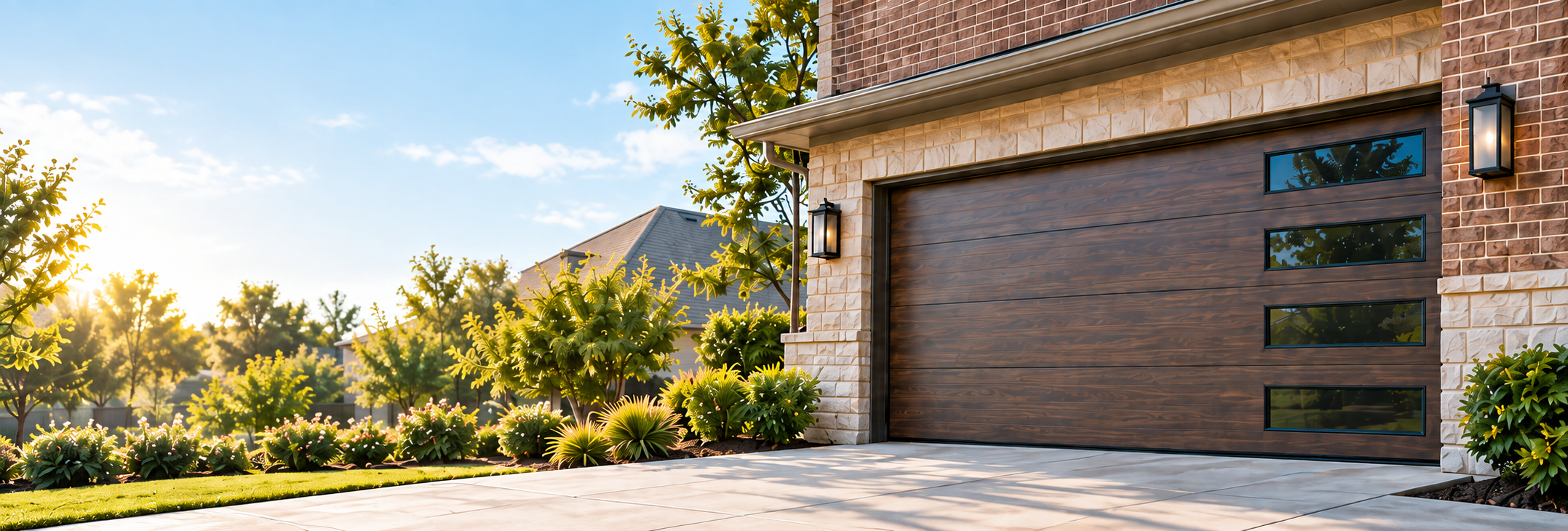
garage door installation · Houston
A new door.
A thoughtful fit.
Plan garage door installation in Houston around your opening, home, and daily routine.
Garage Door Installation in Houston.
A new garage door should suit the way you use the space as well as the front of your home. LifeTime Garage Doors can discuss the opening, preferred appearance, and equipment involved so you understand the choices before ordering. Start with your Houston-area address and whether the project is a new opening or an existing garage.
Start with the opening
Width and height are only part of the picture. Side space, room above the opening, ceiling obstructions, and the route of the tracks affect the installation. Share drawings or accessible photos if you have them; final measurements and the surrounding condition should be checked before a door is selected.
Choose the whole door system
Compare panel design, material, windows, finish, and insulation preferences together. Discuss tracks, springs, hardware, perimeter seals, and opener compatibility as parts of the same project. A quote is easier to compare when you know exactly which components and installation work are included.
Plan the visit and handover
Tell the team about vehicles, stored items, gates, or restricted access that may affect the work area. Ask how the existing equipment will be handled and what checks and operating information are included at completion. Timing depends on the selected product, site conditions, and the confirmed appointment.
What to expect from your service.
Describe the opening
Tell us about the property, current equipment, and the change you have in mind.
Compare the options
Review the door, hardware, opener compatibility, and what the proposed work includes.
Confirm the plan
Agree on measurements, product availability, site preparation, and scheduling.
What a good garage door installation should solve
Begin with how the garage is used
Before looking at colors or panel designs, think about what this garage does for your household. Is it the main way everyone enters the home? Does it double as a workshop, gym, or storage room? Do tall vehicles or ceiling racks limit the space above the door? Those details affect the track layout, opener choice, window placement, and insulation options. We measure the opening, but we also look at the room around it so the new system fits the space you actually have. If you are planning shelves, lighting, or other ceiling work, bring that up early. It is much easier to coordinate those plans before the door and track configuration are finalized.
Choose the door as part of the house
A garage door covers a large part of many Houston homes, so a small sample can look very different once it fills the opening. It helps to compare panel proportions, window shapes, colors, and finishes against photos of your exterior. Inside the garage, consider daylight, privacy, insulation, and how easy the surface will be to care for. If an HOA reviews exterior changes, check its guidelines before ordering. We can help narrow the choices, explain what changes the price, and make sure the written proposal names the model and options you selected. That gives you a clear record of what will arrive, rather than relying on a showroom photo or a verbal description.
Make sure the opener still makes sense
A new door and an existing opener can sometimes work together, but age alone does not answer the question. The opener needs to suit the door’s size, construction, balance, and track arrangement. This is also a good time to decide how you want to use the garage: basic remotes, an exterior keypad, phone control, battery backup, or a wall-mounted unit that keeps the ceiling area open. We look at the door and operator as one system and explain what can stay and what should change. Reusing sound equipment can be sensible; keeping an incompatible or unreliable opener can undermine an otherwise well-planned installation.
Know what the finished job should include
Installation is not complete when the last panel is in place. The door should travel smoothly, sit correctly in the opening, and work with the controls and safety features that belong to the system. We walk through normal operation and point out the information worth keeping, including model details, care guidance, and the written warranty that applies to each product. You should also know who to call if the sound or movement changes later. Springs, cables, and other loaded parts should be left to a trained technician, but every owner should feel comfortable using the controls and recognizing when the door should be stopped and checked.
Garage Door Installation: your questions.
Can I use my existing opener with a new door?
Possibly. The opener, door type, hardware, and overall condition need to be considered together. A working opener is not automatically suitable for every replacement door; ask for compatibility to be checked as part of the proposal.
Do I need exact measurements before calling?
No. Approximate information and photos can help start the conversation. Measurements and clearances should be verified for the actual opening before an order or installation plan is finalized.
Can you match the style of my home?
Discuss panel proportions, windows, colors, and materials you prefer. If your neighborhood has exterior-design requirements, obtain that information early and share it before choosing a product.
What should an installation quote explain?
Ask which door, hardware, opener work, removal, and installation tasks are included. The proposal should identify the selected product and any separate site preparation so you can compare the complete scope.
How should I prepare the garage for installation?
Move vehicles and loose belongings away from the opening and clear the area the team discusses with you. Mention fixed shelves, overhead storage, fragile items, or limited access before the appointment. Leave removal of the old springs, cables, tracks, and panels to the installer, especially if the current door is stuck or damaged.
Is an insulated door always the best choice?
Not for every garage. It is most useful to compare when the garage is attached to the home, used for more than parking, or exposed to strong sun. Insulation can improve the door’s construction and reduce heat transfer, but it will not turn an unconditioned garage into an air-conditioned room. We can compare the full door assembly, seals, windows, and cost with the way you use the space.
Should I repair my current door or install a new one?
That depends on what is wrong and what you want to change. A sound door with one repairable problem may have plenty of useful life left. Replacement becomes a stronger option when damage is widespread, compatible parts are difficult to source, or you want a different look, construction, or operating setup. We can explain what a repair would address and what a new system would change so you can make a practical comparison.
Tell us where you need help.
Share your service address so we can confirm coverage and appointment availability for the requested work.