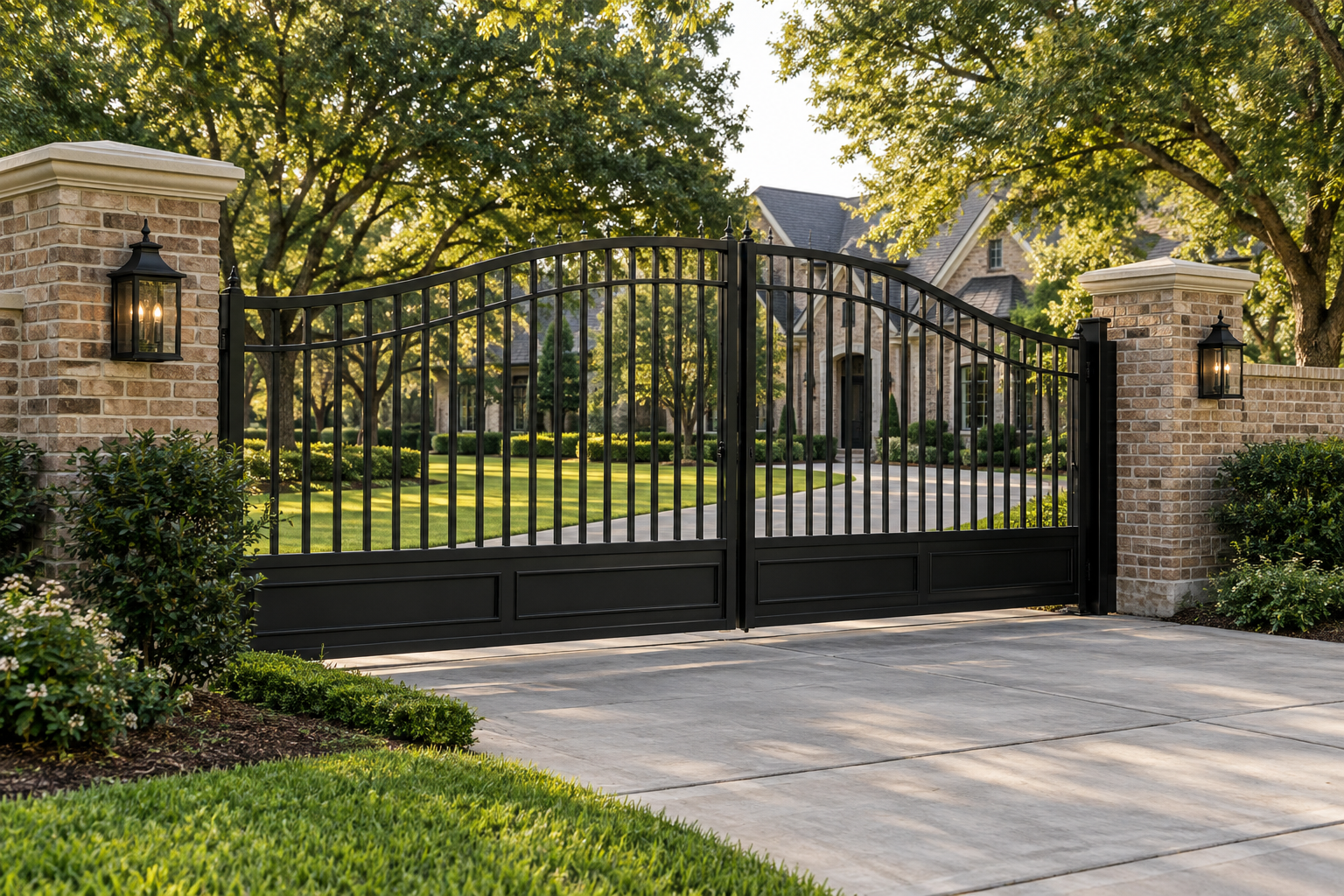
gate opener repair · Houston
When the control
doesn’t open the way.
Discuss gate opener repair in Houston with clear information about the operator, controls, and gate movement.
Gate Opener Repair in Houston.
A gate opener that is unresponsive or inconsistent needs an assessment of the complete operating system. The control you press, the operator's response, and the gate's movement each provide useful information. Contact LifeTime Garage Doors with the model and symptoms to confirm service scope and current availability.
Compare the controls without forcing operation
Tell the team whether one remote fails or every normal control produces the same result. Note any display message already visible and describe sounds or partial movement. Do not bypass protective devices, open electrical enclosures, or repeatedly drive a stalled gate to gather more information.
Include the gate's condition
A dragging, damaged, or restricted gate can be relevant to an operator complaint. Describe visible changes to the entrance and any recent impact or work around it. The assessment should distinguish a control concern from an issue with the moving assembly or the operator itself.
Understand repair and replacement choices
The recommendation depends on the findings, equipment condition, compatible parts, and support for the model. Ask what a repair would address and what a proposed replacement includes. Accessory and control changes should be made clear before the scope is approved.
What to expect from your service.
Describe the entrance
Share the address, gate type, operator details, and the problem or project.
Review the system
Discuss movement, supports, controls, and the specific work that can be provided.
Agree on next steps
Confirm access arrangements, parts or products, scope, and appointment availability.
Fix the cause of the failure, not just the symptom
Describe the symptom and when it occurs
A useful gate opener repair request explains more than that the gate will not work. Note whether it fails from every control, moves only in one direction, stops at a similar point, or behaves differently at particular times. Tell us whether the motor makes a sound and whether the problem followed an impact, power interruption, or work near the entrance. Share visible fault indications without opening an enclosure or changing settings. These observations help prepare the assessment, but they are not a complete diagnosis and should not lead to repeated attempts to force a faulty system to operate.
Separate a control problem from a movement problem
The operator, access controls, protective devices, and mechanical gate interact. A remote that fails while another control works can point the discussion in a different direction from a gate that visibly drags or stops unevenly. Describe what you have noticed without testing the system repeatedly. The gate’s supports, travel path, and hardware need consideration alongside the operator. Replacing a receiver or motor may not address an obstruction, mechanical defect, or incompatible setup. Ask for the cause and the proposed repair to be explained in terms of the complete system at your property.
Use repair-versus-replacement advice tied to the findings
A repair can be appropriate when the fault is identifiable, suitable parts are available, and the remaining system is in usable condition. Replacement may deserve comparison when there are recurring failures, unavailable components, damage, or a need for different access features. Ask what would remain with each option and whether the gate itself needs separate work. The age of a single component does not answer every question. A useful recommendation explains the immediate fault, the condition of related equipment, and what the proposed scope is expected to address.
Check operation and explain what to watch afterward
After authorized work, ask which operating checks were completed and whether any unresolved concern remains. The demonstration should be appropriate to the installed system, controls, and protective devices. Keep the work record with the operator model and previous service history. If the problem was intermittent, ask what observations would be helpful if it returns. Avoid changing force, timing, or protective settings yourself to compensate for abnormal behavior. Clear fault reporting and a record of the repair make it easier to distinguish a new issue from a repeat of the original symptom.
Gate Opener Repair: your questions.
Can a remote fault look like an operator failure?
Yes, the behavior of different controls can help frame the assessment. Tell the team what works and what does not; that information does not by itself prove which part has failed.
Should I keep trying if the motor runs but the gate does not move?
Avoid repeatedly forcing operation. Keep the entrance clear and describe the symptom when calling. The operator and moving gate should be considered together before further use is recommended.
Can you repair every gate opener brand?
No blanket brand or parts claim is made. Provide the exact model and requested work so the team can confirm capability, sourcing, and the appropriate next step.
When is replacement worth discussing?
Ask about the identified fault, overall condition, parts support, and compatible controls. A replacement discussion should explain what changes and why, rather than treating equipment age alone as the answer.
My remote fails but the gate works from another control. Does the motor need replacement?
Not necessarily. The symptom may involve the remote, receiver, programming, compatibility, or another control-related issue. Describe which controls work and which do not, without repeatedly cycling a gate that is behaving abnormally. An assessment should establish the fault before a motor replacement is recommended.
Can a gate opener fault be intermittent?
Yes. Explain when it happens, any visible fault indication, and whether conditions or recent events seem related. A clear history can help the technician investigate. Do not bypass protective devices or change settings to make the symptom disappear; that can conceal the original issue and affect the system’s operation.
Should the gate itself be checked during opener repair?
Yes, its movement and condition are relevant to the assessment. Dragging, damaged supports, worn hardware, or obstructions can affect operation. Tell us about any impact or visible change so the proposed repair considers the gate and the operator together rather than assuming the electrical equipment is the only concern.
Tell us where you need help.
Share your service address so we can confirm coverage and appointment availability for the requested work.